
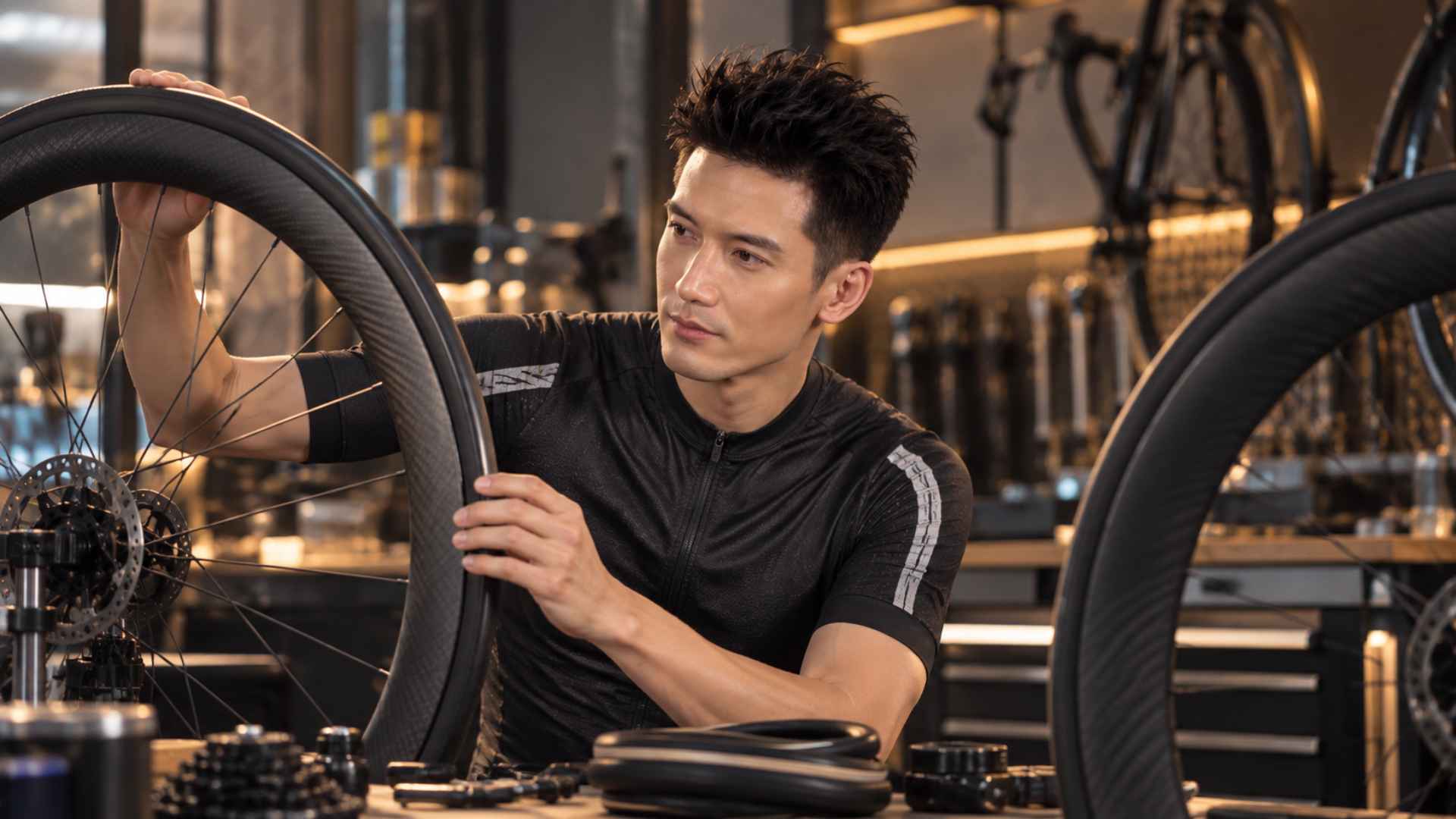
Choosing between hooked and hookless carbon rims is an important decision for cyclists who want to improve performance, reduce weight, or upgrade their bicycle’s wheelset. Although both designs can offer advantages in terms of efficiency, handling, and ride quality, they differ in rim construction, tire retention, and compatibility requirements. Understanding these differences is essential because the rim design influences which tires can be installed, how the tire must be seated, and what inflation limits must be observed. Rather than choosing a wheelset based solely on appearance, weight, or aerodynamic claims, cyclists should evaluate how each design performs under their intended riding conditions.
Carbon wheel technology has expanded across road cycling, gravel riding, and competitive applications, making hooked and hookless systems increasingly relevant to everyday riders. Hookless rims can offer manufacturing and aerodynamic advantages in certain applications, while hooked rims retain a familiar design that accommodates a broader range of compatible tire options. However, neither system is automatically safer or faster in every situation. Actual performance depends on the complete wheel-and-tire combination, product specifications, installation quality, and riding conditions. By understanding the structural differences and safety requirements of each system, cyclists can make informed decisions that balance performance, reliability, and long-term value.
Understanding the Structural Differences Between Hooked and Hookless Carbon Rims
The primary difference between hooked and hookless carbon rims lies in the shape of the rim walls where the tire bead sits. Hooked rims feature small inward-facing lips that help retain the tire bead within the rim. This traditional design is widely used in road cycling and other bicycle categories, with compatibility determined by the rim specifications and tire type. The hooks form part of the tire-retention interface, but they do not eliminate the need for correct tire installation, appropriate inflation pressure, or regular equipment inspections.
Hookless rims, sometimes described as straight-sidewall rims, do not have these inward-facing lips. Instead, they rely on precisely engineered rim dimensions and a compatible tire bead to create a secure interface. Many hookless carbon rims are designed specifically for tubeless tires, although compatibility must always be confirmed for the individual product. Because the tire-retention system differs, hookless rims typically have stricter requirements regarding tire models, tire dimensions, and maximum inflation pressure. These restrictions are essential considerations when selecting a wheelset, particularly for riders who already own several sets of tires.
How Hooked and Hookless Rims Affect Cycling Performance
Both rim designs can deliver excellent cycling performance when correctly matched with suitable tires. Differences in aerodynamic efficiency, weight, rolling resistance, and handling depend on the complete wheel system rather than the presence or absence of a rim hook alone. Rim depth, internal width, external width, carbon layup, tire construction, and tire pressure all contribute to the riding experience. A well-designed hooked rim may outperform a poorly matched hookless setup, just as a properly engineered hookless wheelset may provide advantages over a less suitable alternative.
Hookless construction can simplify certain aspects of rim manufacturing and may support particular aerodynamic profiles. However, these potential advantages vary by product and should not be assumed to guarantee lower weight, better speed, or improved durability. Hooked rims can also incorporate advanced carbon construction and aerodynamic shaping. For recreational riders, the most meaningful performance improvements often come from selecting appropriate tires, maintaining correct pressure, and ensuring that the entire wheelset suits the bicycle and riding environment.
Tire Compatibility and Inflation Requirements
Tire compatibility is one of the most important considerations when comparing hooked and hookless carbon rims. A tire that fits a hooked rim is not necessarily approved for a hookless rim, even when both products share the same nominal diameter. Hookless systems require tires specifically approved for the relevant rim standard and dimensions. Cyclists should consult the wheel manufacturer’s compatibility documentation and the tire manufacturer’s specifications before installation rather than relying on appearance, informal recommendations, or nominal size alone.
Inflation limits also deserve careful attention. Many hookless road wheel systems impose a maximum pressure of 5 bar, approximately 72.5 psi, but this is not a universal limit for every wheel category or product. The applicable maximum must be confirmed using the manufacturer’s documentation for the exact rim and tire combination. The lowest relevant pressure limit among the compatible components should be respected, and riders must also remain within the tire’s approved pressure range. Excessive pressure can increase the risk of tire-bead failure or sudden tire separation, potentially resulting in loss of control.
Tire Selection for Hooked Carbon Rims
Hooked carbon rims can accommodate a range of compatible tire designs, including certain clincher tires used with inner tubes and approved tubeless tires. This flexibility can be useful for cyclists who prefer to choose between different tire constructions or who already own tires intended for conventional hooked rims. Nevertheless, compatibility is never universal. Rim diameter, internal width, tire dimensions, bead design, and the manufacturer’s stated restrictions must all be checked before use.
For road cycling, tire selection should account for the balance between rolling efficiency, comfort, puncture protection, and grip. Wider tires may improve comfort on rough pavement when the frame provides sufficient clearance and the setup remains within approved specifications. Tubeless tires can reduce some types of punctures when installed correctly, while inner-tube systems may offer simpler roadside repairs for certain riders. The key advantage of a hooked rim is not unrestricted compatibility, but the availability of a broad range of suitable tire options within the relevant standards.
Tire Selection for Hookless Carbon Rims
Hookless carbon rims require particular attention to tire approval and installation procedures. Riders should use only tire models explicitly permitted by the rim manufacturer and compatible with the applicable hookless standard. A tire that physically fits onto a hookless rim is not necessarily safe or approved for use. Compatibility lists and technical documentation should take priority over assumptions based on brand reputation or experience with other wheelsets.
Correct bead seating, suitable rim tape, compatible tubeless valves, and appropriate sealant are also important when the wheel is designed for tubeless use. During installation, the tire bead should seat evenly around the rim, and the system should be inspected for leaks, deformation, or other irregularities. Riders should never exceed the specified pressure limit in an attempt to make installation easier. If the tire does not seat correctly or the compatibility requirements are unclear, a qualified bicycle mechanic should inspect the setup before it is ridden.
Safety Considerations for Hooked and Hookless Carbon Rims
Safety depends on more than rim construction alone. Both hooked and hookless carbon rims can perform reliably when manufactured to appropriate standards, maintained correctly, and used within their intended operating limits. However, hookless systems require especially careful compliance with tire compatibility and pressure specifications because their bead-retention geometry differs from that of hooked rims. Incorrect tire selection, excessive inflation, damaged rim walls, or improper installation can compromise the security of the tire-to-rim interface.
Before every ride, cyclists should check tire pressure, inspect the tire sidewalls and tread, and look for visible damage around the rim and bead area. Carbon rims should also be examined for cracks, impact damage, or unusual changes in braking performance. After a significant impact, such as striking a pothole or rock at speed, the wheel should be inspected before continued use. Any suspected structural damage warrants professional assessment, and a damaged carbon rim should not be ridden until its safety has been established.
Understanding Pressure Limits and Bead Retention
Inflation pressure directly affects how the tire interacts with the rim. Higher pressure is not automatically better because excessive inflation can increase impact harshness, reduce grip on uneven surfaces, and exceed the operating limits of the wheel or tire. Hookless systems are particularly sensitive to compliance with their specified pressure limits, and riders should never assume that the pressure recommendations for a hooked wheelset also apply to a hookless design.
The correct pressure depends on tire width, rider and bicycle weight, road conditions, tire construction, and the limits specified by the manufacturers. A pressure calculator can provide a useful starting point, but it cannot override the approved limits for a particular setup. Riders should verify the recommendations for the exact wheel and tire combination and adjust pressure within those limits to suit the conditions. If the approved pressure ranges do not overlap, the combination should not be used.
Recognizing Installation and Maintenance Risks
Improper installation can create risks with either rim design. Incorrectly applied rim tape, damaged tire beads, unsuitable valves, incompatible tires, or uneven bead seating may cause air leakage or other failures. Hookless systems additionally require strict adherence to the manufacturer’s tire approval requirements. Using an unapproved tire simply because it appears to fit can create an unsafe setup.
Regular maintenance helps reduce avoidable problems. Cyclists should inspect the rim surface, check for damage after impacts, maintain tubeless sealant according to its manufacturer’s guidance, and ensure that valves and other components remain secure. Cleaning should be performed using products suitable for the wheel’s finish and construction. When a tire repeatedly loses pressure, the bead does not seat properly, or the rim shows signs of damage, the cause should be identified before the bicycle returns to service.
Choosing the Right Carbon Rim Design for Different Riding Conditions
The choice between hooked and hookless carbon rims should reflect the rider’s typical routes, tire preferences, and maintenance expectations. Road cyclists who value flexibility in tire selection may prefer a compatible hooked system, particularly if they regularly change tire models or use both tubed and tubeless configurations where permitted. Riders considering hookless road wheels should first confirm that their preferred tires are approved and that the specified pressure range suits their weight and riding conditions.
Gravel cyclists should consider impact resistance, tire clearance, approved tire widths, and the manufacturer’s intended use for the wheelset. Not every hookless rim is designed for gravel riding, and not every tire marketed for gravel is compatible with every hookless wheel. Mountain biking introduces additional considerations involving rim strength, tire construction, and the repeated impacts associated with technical terrain. In all cases, the product’s intended application and technical specifications should guide the decision rather than broad assumptions about either design.
Long-distance riders may also want to consider serviceability and replacement costs. A wheelset that performs exceptionally well but requires a limited selection of tires may be less practical for someone who travels frequently or depends on easily available replacement parts. Conversely, a rider with access to compatible tires and reliable maintenance support may find a hookless system suitable for their needs. Evaluating these practical factors helps ensure that a wheel upgrade remains useful beyond its initial performance benefits.
Evaluating Cost, Durability, and Long-Term Value
Carbon wheelsets often represent a significant investment, so buyers should evaluate the total cost of ownership rather than focusing only on the purchase price. Tire availability, replacement costs, maintenance requirements, warranty coverage, and the availability of compatible components can all influence long-term value. A less expensive wheelset may become costly if its replacement tires are difficult to obtain, while a premium model may provide worthwhile benefits for riders who can use its features consistently.
Durability depends on the quality of the carbon construction, rim design, manufacturing standards, riding conditions, and maintenance practices. Neither hooked nor hookless construction guarantees greater impact resistance in every application. Buyers should review independent testing where available, manufacturer warranty terms, and guidance on inspection or replacement following damage. It is also worth confirming whether the manufacturer provides clear tire compatibility documentation and accessible technical support.
For many cyclists, the best option is the wheelset that matches their real-world requirements without creating unnecessary restrictions or expenses. Riders who prioritize broad tire choice may favor a suitable hooked system, while those who prefer a compatible hookless setup may appreciate its particular design and performance characteristics. The decision should ultimately be based on verified compatibility, practical benefits, and confidence in the complete wheel-and-tire system.
Making an Informed Decision Between Hooked and Hookless Carbon Rims
Hooked and hookless carbon rims offer different approaches to tire retention, and each can support reliable cycling when used correctly. Hooked rims feature inward-facing lips and can accommodate a broad selection of compatible tires. Hookless rims use straight sidewalls and depend on a precisely matched tire-and-rim interface, often with stricter tire approval and inflation requirements. These differences make compatibility and safe installation central to the selection process.
Before purchasing either design, cyclists should verify rim dimensions, tire approval, maximum inflation pressure, braking compatibility, and the wheel’s intended riding category. They should also consider the availability of replacement tires, maintenance needs, and the manufacturer’s support policies. Most importantly, riders should never assume that a tire is safe simply because it fits or that a pressure suitable for one wheelset is acceptable for another.
Ultimately, selecting the right carbon rims is about balancing performance, safety, compatibility, and long-term value. By prioritizing manufacturer-approved combinations and following correct installation and maintenance procedures, cyclists can enjoy the benefits of modern wheel technology while reducing avoidable risks across their everyday rides and more demanding cycling adventures.