
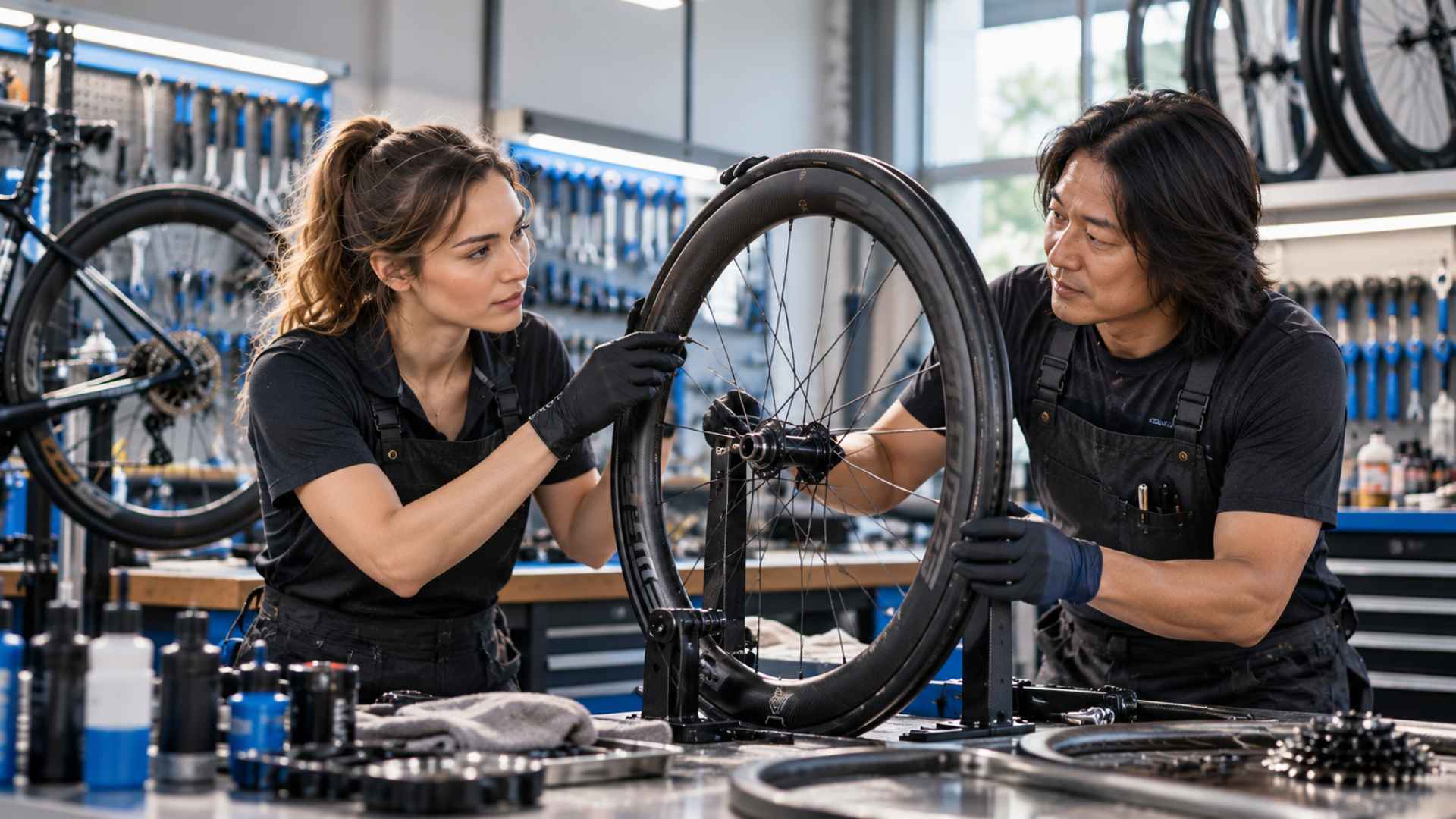
Modern bicycle wheels influence much more than the appearance of a bike. They affect acceleration, steering response, traction, and the way road vibrations reach the rider. Every wheel combines a rim, spokes, hub, bearings, and tire into a system that must withstand repeated loads. For cyclists who travel on paved roads, gravel routes, or uneven trails, the interaction between these parts has a direct effect on ride quality and confidence.
Carbon composite rims have become a significant development in bicycle engineering. Their construction allows engineers to adjust material placement and rim shape for specific uses. Yet a carbon wheel is not automatically faster, lighter, or more comfortable than every aluminum alternative. Tire dimensions, inflation pressure, spoke arrangement, and the bicycle itself also influence performance. A useful assessment considers the complete wheel rather than a single material or advertised specification. This broader perspective is especially useful when cyclists compare equipment for commuting, weekend tours, or competitive events.
Carbon Composite Materials and Wheel Structure
Carbon composite rims are generally made from carbon fibers embedded in a polymer resin. The fibers provide reinforcement, while the resin supports their position and transfers forces within the structure. Manufacturers can place layers in different directions and vary their thickness across the rim. This flexibility allows different sections to address spoke tension, tire pressure, cornering loads, and impacts. The result depends on the quality of the design and production process, not simply the quantity of carbon fiber. Consistent curing and accurate rim dimensions also help manufacturers produce components with repeatable structural properties.
Wheel stiffness also requires careful interpretation. Lateral stiffness describes resistance to sideways deflection, while radial stiffness concerns vertical deformation under load. Rim construction contributes to both, but spokes, hub dimensions, and spoke tension also matter. Greater stiffness does not always mean a more comfortable ride. On ordinary roads, pneumatic tires absorb far more of the small surface irregularities than the rim. A balanced wheel therefore needs adequate structural support alongside suitable tires and dependable assembly. Different priorities are appropriate for smooth racing circuits and rough rural roads.
Rim Design, Tire Compatibility, and Ride Efficiency
Rim shape influences the way a bicycle moves through the air. Deeper rims can reduce aerodynamic drag under certain conditions, particularly at higher speeds, but results depend on rim width, tire shape, wind direction, and the rest of the bicycle. Deep profiles can also alter steering behavior in crosswinds. For riders on exposed routes, predictable control may matter as much as an aerodynamic advantage. Shallow and moderate-depth rims remain practical options for many forms of road and endurance cycling. Rim depth should therefore be assessed together with typical speed and the wind conditions encountered most often.
Tire selection has an equally important role in comfort and efficiency. Internal rim width affects the shape of an installed tire, while tire volume and pressure influence grip, rolling resistance, and vibration. Excessive pressure can make rough pavement feel harsh and may increase energy losses from surface irregularities. Pressure that is too low can increase the risk of rim impacts or poor tire support. Tubeless setups can offer useful puncture-sealing capability when compatible components and sealant are correctly maintained. Riders must follow approved tire and rim combinations, especially with hookless rims and their specific pressure limits. Sufficient frame and fork clearance is necessary as well, particularly when wider tires are installed.
Durability, Maintenance, and Different Cycling Routes
The ideal wheel depends on its intended environment. Road cyclists may value aerodynamic efficiency and low mass, while gravel riders often place greater emphasis on tire clearance, impact resistance, and stability over loose surfaces. Mountain bike wheels face additional demands from rocks, roots, and repeated hard landings. A lighter rim can reduce rotational inertia during acceleration, but low weight alone cannot establish durability. Wheel dimensions, spoke layout, load limits, and construction standards must suit the rider and terrain. Axle standards, brake interfaces, and cassette compatibility also need confirmation before any wheelset change.
Regular checks help preserve wheel performance. Riders should inspect rims after hard impacts, confirm that spokes remain appropriately tensioned, and watch for unexpected wobble or bearing play. Carbon damage is not always obvious: an impact may affect internal layers without creating a large visible bend. Suspected cracks or unusual noises warrant professional assessment before further use. Tires should remain within approved pressure limits, and tubeless systems need periodic checks of sealant, valves, and rim tape. With correct compatibility, sound assembly, and routine care, modern bicycle wheels can provide stable, comfortable service across a wide range of everyday routes. Equipment matched to actual use is more valuable than a component selected solely for appearance.