
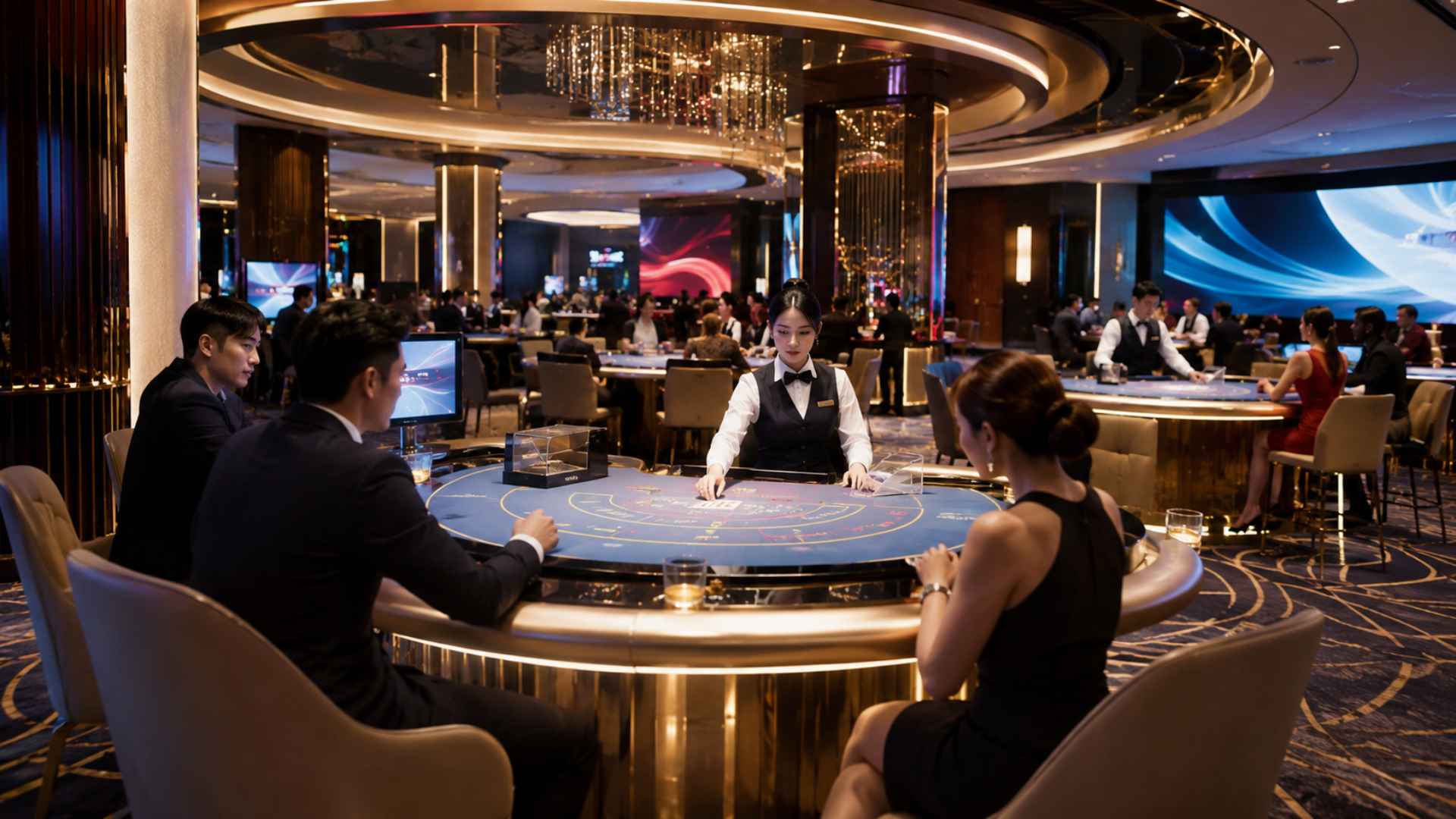
Baccarat changed significantly when casinos began treating speed, staffing, and accessible layouts as important parts of table design. Traditional salon play involved ceremony and sometimes substantial minimum wagers. Modern venues offer a wider range of formats, from staffed tables to electronic terminals. Unlike a slot machine, the basic game still revolves around two card hands and a fixed scoring system. What has changed most is the way customers encounter the deal and place their wagers.
For much of its history, baccarat relied on large tables and visible dealer rituals. Big room presentation suited its reputation but required space and employees. Mini versions reduced the footprint, often letting one dealer handle the round in a manner closer to other standard casino tables. This shift made the game easier to introduce on general gaming floors and allowed operators to respond to demand without maintaining a separate ceremonial room.
Modern production also depends on clear procedures. Dealers follow drawing charts, security teams monitor transactions, and regulators set conditions for the equipment and games that casinos may use. Digital scoreboards can display previous outcomes, while automated systems help record bets and settlements. These features are not substitutes for sound gambling rules, but they illustrate the movement from a relatively personal social contest toward a tightly managed service.
Smaller Tables and Standardized Dealer Procedures
Mini tables generally preserve the familiar scoring rules of punto banco while altering the surrounding service. A dealer manages the cards, bets, and settlement, and the customer does not decide which third cards appear. Some venues use a single dealer; others retain more elaborate staffing for premium rooms. The difference is mostly operational. Table size and ceremony do not create a mathematical advantage for a patron.
One persistent point of confusion concerns ease and control. A format may be simple to follow, yet that does not make its outcomes predictable. Fixed third card rules remove most decisions from the customer, and a history display cannot tell anyone which side will win next. Staff training, visible rules, and published payouts are more valuable than claims of special patterns. They help customers see what is being offered before any money is placed.
Baccarat and the Rise of Remote Casino Tables
Online Baccarat brought the game to screens rather than physical casino chairs, although legal availability depends on jurisdiction. The Thai name บาคาร่า also appears in digital discussions, a sign that the audience is not limited to English speaking markets. Some remote products use computer generated outcomes; others transmit actual cards from a staffed studio. Those forms may look similar on a phone, but the technology behind the round and the regulatory requirements can differ.
Each Live Dealer product streams a person dealing cards while bets are placed through an interface. A Live Casino service may offer several such tables, sometimes with different limits or presentation styles. These terms describe delivery methods, not guarantees of better odds or safer play. Video quality, published game rules, independent testing where applicable, and local licensing are relevant when judging whether a particular service operates as represented.
Technology and Continuity at the Card Table
Electronic terminals can allow several customers to wager on results from one physical or automated table. This changes the number of seats, the pace of settlement, and the way staff interact with guests. It also demands dependable equipment and accurate records. In regulated environments, these systems operate under technical and compliance rules that may be very different from those governing traditional felt tables.
The modern history of baccarat is largely the history of new ways to present an old calculation. A small table, a camera feed, and an electronic terminal can all show the same pursuit of nine. Each format, however, creates a different social experience. The quietness of a traditional room, the bustle of a casino floor, and the privacy of a screen should not be treated as interchangeable features merely because the cards behave alike.
Modern baccarat is likely to remain a recognizable game precisely because its core rules are stable. Operators can vary the surroundings without changing the essential contest between two hands. That flexibility has helped the game move between venue types and generations of technology. For players and historians alike, the most useful distinction is between the mathematics of a round and the business systems built around it.