
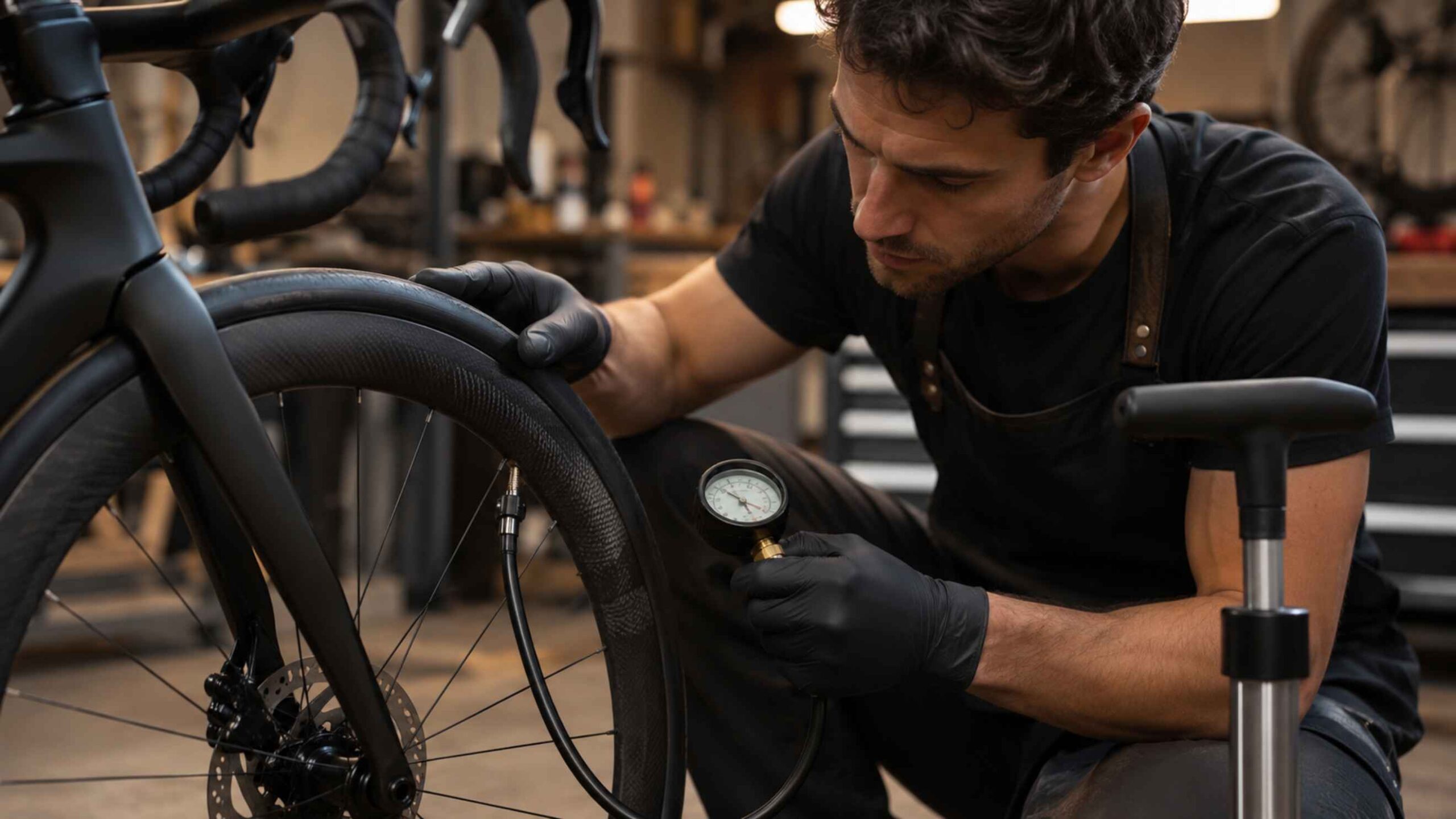
Road bicycle performance depends on the relationship between tire construction, inflation pressure, rim dimensions, and riding conditions. Carbon rims are widely used on performance oriented bicycles, but their compatibility with particular tires should never be assumed from appearance alone. Differences in bead design, internal rim width, and permitted inflation pressure can affect both ride quality and the security of the tire rim connection.
Tire pressure influences rolling behavior, traction, vibration, and rider comfort. Excessively high pressure can reduce the tire’s ability to conform to uneven road surfaces, while insufficient pressure may increase the risk of rim impacts or unstable handling. Suitable pressure depends on several factors, including combined rider and bicycle weight, tire width, road texture, and whether the system uses inner tubes.
Modern road wheels are available with hooked and hookless rim designs. These constructions secure tire beads differently and can have different compatibility requirements. The relevant limits are established by the wheel and tire manufacturers, not by the carbon material alone. Riders should therefore examine both sets of specifications before selecting tires or changing inflation pressure for a particular ride.
Carbon Rim Construction and Tire Fit
Hooked rims have an inward facing lip near the upper edge of the rim wall that helps retain the tire bead. Hookless rims use a straight sided profile and depend on correctly specified bead dimensions and compatible tire construction. Hookless systems are subject to additional tire approval and pressure restrictions. Not every tire labeled tubeless ready is automatically approved for every hookless road wheel.
Rim width also affects the final shape of a mounted tire. The same nominal tire can measure differently when installed on rims with different internal widths. For road bicycle rims, the bead seat diameter must match the tire specification; many modern road systems use the 622 millimeter bead seat diameter. Tire width compatibility, frame clearance, and manufacturer guidance remain important even when that diameter matches.
Pressure Limits and Road Conditions
The European Tyre and Rim Technical Organisation identifies a maximum pressure of 5 bar, approximately 72.5 psi, for common road hookless applications. However, this figure must not be treated as permission to inflate every compatible system to that level. Tire width, the manufacturer’s stated limits, and specific wheel requirements may demand a lower maximum pressure. The most restrictive applicable limit should always be followed.
Pressure selection also changes with road conditions. Wider tires can generally operate at lower pressures than narrow tires when carrying comparable loads, provided the setup remains within its approved range. Rough pavement often favors pressures that allow greater tire deformation and reduced vibration. Front and rear pressures may differ because load distribution is rarely equal, and inflation should be checked with a reliable gauge.
Maintenance and Compatibility Checks
Tire compatibility needs attention whenever riders replace worn tires, change wheelsets, or convert between tubes and tubeless arrangements. Using an inner tube does not automatically make an otherwise incompatible tire suitable for a hookless rim. Correct bead seating, approved sealant where applicable, and the appropriate installation procedure are all relevant. Riders should avoid exceeding pressure limits during initial inflation.
Routine inspection can reveal problems that affect riding safety. Cuts near the tire bead, damaged rim sidewalls, persistent air loss, or unusual tire movement should be investigated before another ride. Carbon rims also require careful examination after significant impacts. Visible damage may not fully describe the structural condition, making professional inspection appropriate when cracks or other suspicious signs appear.
Reliable tire performance comes from treating pressure and compatibility as related considerations rather than separate adjustments. Correct sizing and an approved tire rim combination establish the starting point. Pressure can then be selected according to load, tire characteristics, and road conditions without exceeding technical limits. Following these principles helps protect equipment while maintaining predictable handling and consistent comfort on the road.