
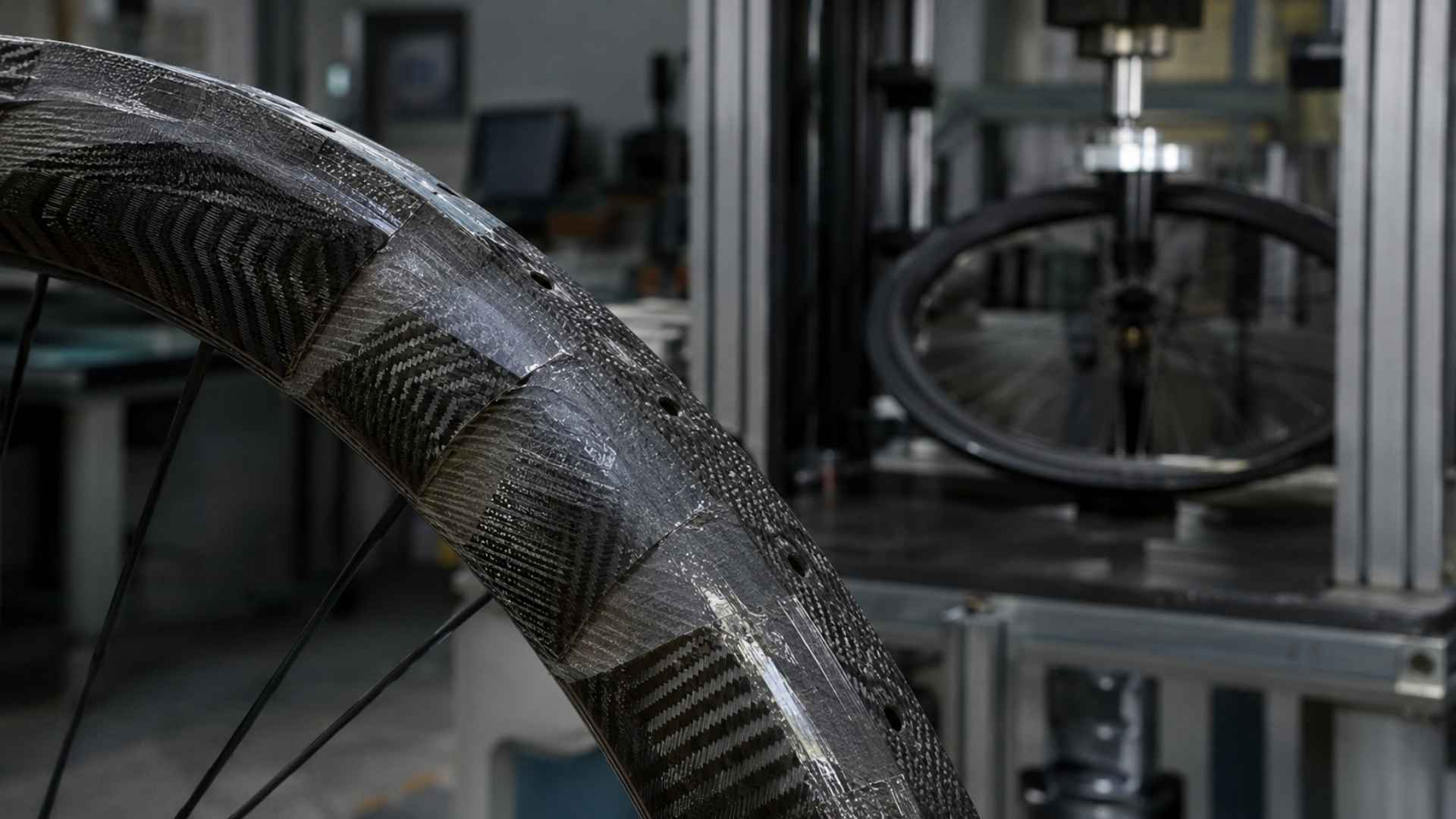
Carbon fiber bicycle wheels rely on composite construction rather than the uniform material structure found in conventional metal rims. Their strength comes from carbon fibers embedded in a polymer resin system. Fiber orientation, layer placement, and manufacturing quality influence how the finished structure responds to spoke tension, road impacts, cornering forces, and repeated use under different riding conditions.
Unlike metals, carbon fiber composites do not have identical mechanical properties in every direction. Fibers provide high stiffness and strength primarily along their own orientation, while the resin transfers loads between fibers and helps maintain the structure. Engineers arrange multiple layers at selected angles to address forces from different directions. These arrangements are commonly described as laminate layup patterns.
Wheel durability depends on more than simply adding material. Greater thickness may increase weight without solving weaknesses around spoke holes, rim walls, or highly stressed transitions. Engineers must consider the shape of the rim, fiber continuity, local reinforcement, resin properties, and manufacturing defects. Effective construction balances stiffness, impact tolerance, structural consistency, and the loads expected during service.
Fiber Orientation and Structural Behavior
Unidirectional carbon fiber layers offer efficient reinforcement along a chosen direction. Layers positioned at different angles can contribute to resistance against tension, shear, and deformation. Orientations such as 0, 45, and 90 degrees are common reference directions in composite engineering, although their relationship to wheel geometry depends on the laminate coordinate system. Actual rim designs use sequences selected for particular load conditions.
Woven fabrics provide fibers in more than one direction and can offer practical handling characteristics during manufacture. However, woven construction is not automatically stronger than unidirectional material. Fiber waviness, resin distribution, layer thickness, and placement affect mechanical performance. Manufacturers may combine fabric types to reinforce complex contours while controlling the weight and stiffness of the finished rim.
Repeated Loads and Fatigue Damage
Bicycle rims experience repeated forces as wheels rotate over uneven surfaces. Spoke tension establishes the wheel’s structural condition, while rider weight, braking, cornering, and road impacts create changing loads. Composite fatigue behavior differs from metallic fatigue because damage can involve matrix cracking, separation between layers, or fiber failure. Small internal defects may develop without obvious surface deformation.
Layup design influences the distribution of these stresses. Reinforcement around spoke attachment points can help manage concentrated loads, while carefully arranged layers in the rim bed and sidewalls address other structural demands. Poor consolidation, air voids, or inconsistent curing can reduce performance even when the intended fiber arrangement is sound. Manufacturing quality is therefore inseparable from the laminate design.
Impact Resistance and Wheel Safety Tests
Impact resistance presents a different challenge from repeated fatigue loading. Sudden strikes against potholes, rocks, or road edges can introduce high localized forces. Composite rims may sustain internal delamination or fiber damage that is not immediately visible. Resistance depends on the laminate structure, resin toughness, rim geometry, tire support, and the severity and direction of the impact.
Formal wheel testing helps assess performance under defined conditions. ISO 4210-7:2023 includes test methods addressing wheel and rim characteristics, including impact and static strength. Composite wheels also have relevant temperature-related test provisions. Passing specified tests provides evidence of performance under those procedures, but it does not guarantee immunity from every possible accident or long-term service condition.
Durable carbon fiber wheels result from coordinated decisions about material selection, layer orientation, curing, rim geometry, and quality control. Appropriate spoke tension and inspection also matter after manufacture. Damage from severe impacts should be evaluated carefully rather than judged solely by appearance. A well-designed laminate distributes expected loads efficiently while accounting for the distinct failure mechanisms of composite materials.